
Car Park Sweeping Brisbane Services Explained
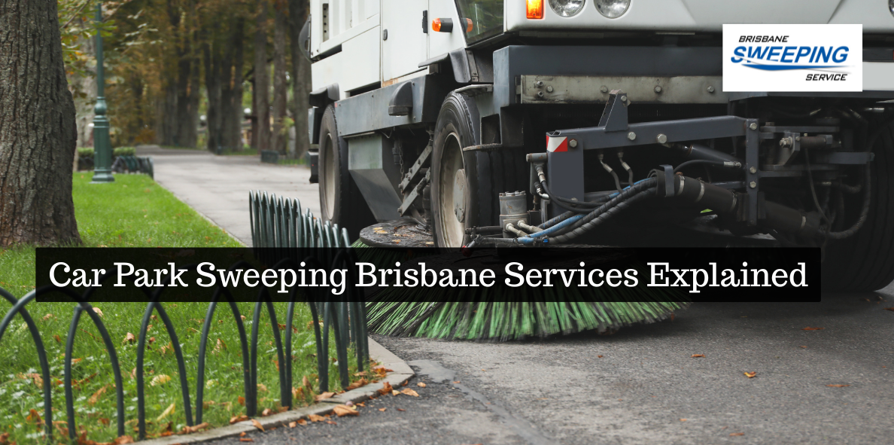
Welcome to our guide on car park sweeping services in Brisbane.
Our team at Brisbane Sweeping has cleaned hundreds of commercial car parks across Brisbane and its surrounding suburbs, including shopping centres, strata basements, warehouses, and office buildings. Along the way, we’ve seen the problems that come from poor maintenance.
In this guide, we’ll talk about:
- What’s actually included in car park sweeping services
- Why regular cleaning saves you money long-term
- Which Brisbane properties benefit most
- How often should you schedule sweeping
Read on to find out what your car park actually needs.
What Do Car Park Sweeping Services in Brisbane Include?
Car park sweeping services in Brisbane include mechanical sweeping, scrubbing, pressure cleaning, edge detailing, and after-hours scheduling. These options keep your commercial properties clean and safe.
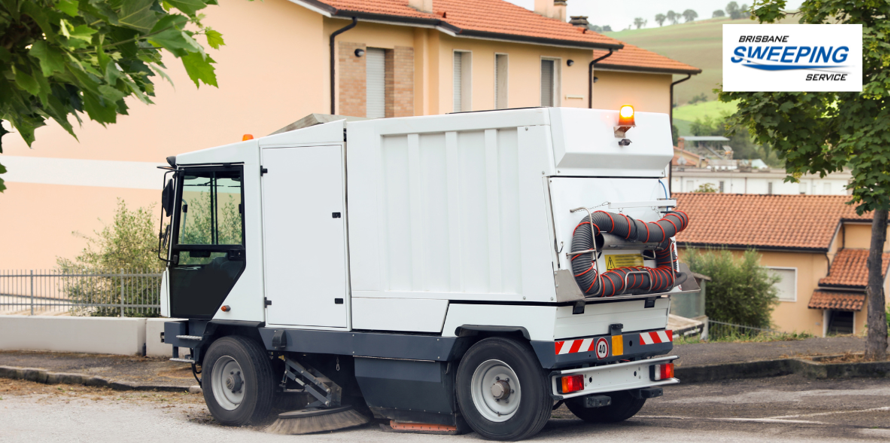
Here’s a quick rundown of what’s typically included:
- Mechanical Sweeping: In this type of cleaning service, ride-on sweepers clear dust, dirt, leaves, and general debris from large areas fast. Most machines have side brooms that get right up against kerbs and walls, so nothing gets left behind.
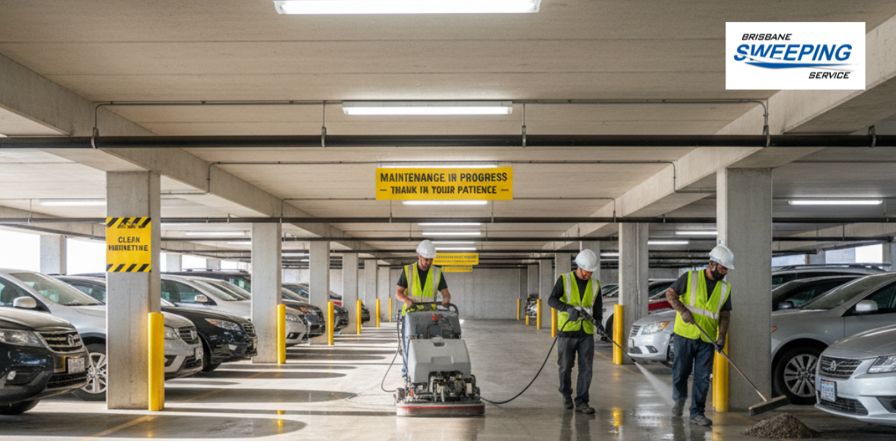
- Scrubbing: Unfortunately, tyre marks and ingrained grime need more than a sweep. That’s where floor scrubbers prove especially useful. Specifically in underground car parks, rubber buildup near the ramps gets bad, and scrubbing gets rid of all the waste.
- Pressure Cleaning: Oil stains, grease, and long-term buildup can’t be removed by regular sweeping alone. That’s why high-pressure washing is needed to clear the dark patches you often see near entrances.
- Edge and Corner Detailing: You’ll need manual cleaning for areas machines can’t reach. Even sometimes, it’s the only way to properly clean columns, stairwells, and tight corners where rubbish builds up.
Most professional cleaners use a combination of ride-on sweepers and scrubbers for larger car parks. It’s faster, way more thorough, and gets into places a bloke with a broom never could.
And the best thing about these cleaning services is that you don’t have to shut down during business hours. Most commercial clients book after-hours jobs, so the whole thing gets done overnight or early morning.
By the time your first customers roll in, the car park’s spotless, and nobody even knows it happened.
Why Does Your Brisbane Car Park Need Regular Cleaning?
Your Brisbane car park needs regular cleaning because debris, oil, and litter create safety hazards and damage surfaces. They also block drains and attract pests. Property managers usually don’t notice these problems until something goes wrong.
Let’s get into more details about why you need to clean your car park frequently.
Slip and Trip Hazards From Oil and Debris
Every oil slick and piece of loose gravel in your car park is an accident waiting to happen. Vehicles drip oil constantly, and it leaves slick patches that nobody notices until someone falls flat on their back.
And when loose gravel or broken glass is left behind, it doesn’t take long before it becomes a safety risk. Older visitors and people in heels are more likely to be affected, but in reality, anyone can be caught out (all it takes is one wrong step).
But if you stay on top of maintenance, you reduce the risk of unexpected incidents for both visitors and insurers.
Surface Damage From Dirt and Grit Buildup
Removing grit and debris regularly is one of the cheapest ways to extend your pavement’s lifespan by years. And one of the worst things about grit is that every time a car drives over it, it grinds into the surface like sandpaper.
Not only that, if you leave it sitting there long enough, tiny cracks will start appearing, too. Then water gets in, the cracks spread, and before you know it, you’re staring at potholes.
Pro tip: Increase sweeping frequency during nearby roadworks, even if your site traffic stays the same. It’s because airborne grit travels further than most people expect.
Blocked Drains and Stormwater Issues
Have you ever noticed water pooling in a car park days after the rain stopped? That’s a blocked drain, and it happens because leaves, litter, and general muck build up around drain grates over time.
We’ve seen Brisbane car parks turn into mini lakes after storms because nobody thought to clear the drains beforehand. What’s worse, standing water softens asphalt and creates slip hazards. Honestly, it just looks terrible.
More importantly, if debris washes into stormwater drains, it can pollute local waterways. And Queensland’s environmental rules make it illegal to let contaminants enter the stormwater system without proper controls.
Pests Attracted by Food Scraps and Litter
Rats and cockroaches don’t need much to move in. A few food scraps left in a corner are enough to attract them.
Once they find a food source, they tend to stick around, especially in shopping centres with food courts where scraps are common. Brisbane’s warm climate only makes the problem worse (it’s the perfect setup for them).
However, regular cleaning removes that food source. When there’s nothing to eat, pests have no reason to stay, and it stops the pest issue before it starts.
Poor First Impressions for Customers
Believe it or not, a clean car park makes a good first impression before customers even walk inside. Since people judge quickly, things like rubbish blowing around, oil stains near the entrance, or overflowing bins can make the place feel neglected.
And when that impression sets in, some customers choose not to come back to your business. They may have already assumed that the inside of your shop won’t be any better than the outside.
Which Brisbane Properties Benefit From Car Park Sweeping?
Brisbane properties that benefit from car park sweeping include shopping centres, strata complexes, warehouses, industrial sites, and office buildings. Regular sweeping helps keep these sites safe for users while protecting surfaces from long-term wear.
Below is a breakdown of why professional sweeping is important for each site:
- Shopping Centres: High foot traffic and food court waste mean shopping centre car parks need regular sweeping. As trolleys move through the area, rubbish gets dragged around, and people often drop food. Plus, vehicles bring dirt from the street, so the mess builds up quickly.
- Strata Complexes: Body corporates have maintenance obligations to meet, and residents aren’t shy about complaining when the car park looks neglected. That’s where you can keep everyone happy with regular sweeping and ticking the compliance box.
- Warehouses and Industrial Sites: Dust, broken pallets, and packaging waste pile up quickly in these environments. There’s also WHS compliance to think about, as a clean floor means fewer tripping hazards for workers and forklift operators.
- Office Buildings: Tenants expect a certain standard, especially in Brisbane’s Central Business District (CBD). So if your car park looks neglected, it reflects poorly on the whole building. When those standards slip, property managers are usually the first to hear about it.
In each case, sweeping plays an essential role in day-to-day site management.
How Often Should You Schedule Car Park Sweeping?
You should schedule car park sweeping weekly for high-traffic sites, fortnightly for medium-traffic properties, and monthly for less active locations. The right frequency comes down to how many vehicles and people move through your space each day.
Here’s a general guide:
| Property Type | Traffic Level | Recommended Frequency |
| Shopping Centres | High | Weekly |
| Strata Complexes | Medium | Fortnightly to Monthly |
| Warehouses | Medium-High | Weekly to Fortnightly |
| Office Buildings | Low-Medium | Monthly |
Shopping centres and busy warehouses need weekly sweeping at a minimum. There’s just too much going on for anything less frequent to keep up.
But strata complexes and office buildings can usually get away with fortnightly or monthly cleans. However, it depends on how much foot traffic you’re dealing with (just one event can throw your usual schedule off).
Brisbane’s storm season can also increase how often you need cleaning. From November to April, leaves and debris build up faster, so you may need to schedule sweeping more frequently. The same applies if your property is near a construction site, where dust is constantly blowing in.
And if you’ve got a one-off job, like cleaning up after construction or getting the site ready for an inspection, it doesn’t have to be an ongoing process. Rather, in those cases, most cleaning companies can handle it as a single clean without tying you into a contract.
That said, we always recommend starting with a basic schedule and adjusting from there. If the car park looks dirty before the next clean, increase the frequency. But if it still looks fine, pat yourself on the back, because you’re on the right track.
Helpful tip: Review CCTV footage from busy periods to identify where debris concentrates. Then adjust the sweeping frequency for those zones instead of the whole site.
See also: Risks and Challenges in Supply Chain Technology
Next Steps for Your Car Park Cleaning Services
You’ve reached the end of our guide on car park sweeping and maintenance. By now, you should have a clear idea of what sweeping involves, why regular cleaning helps prevent issues, and how often different sites need to be cleaned.
Whatever type of property you manage, staying on top of debris, oil, and litter helps keep the space safer and looking more professional.
If your car park hasn’t been swept in a while, or you’re not sure what schedule makes sense for your property, give us a call. Brisbane Sweeping sweeps commercial properties across Brisbane, and we’re happy to take a look and provide a free quote.